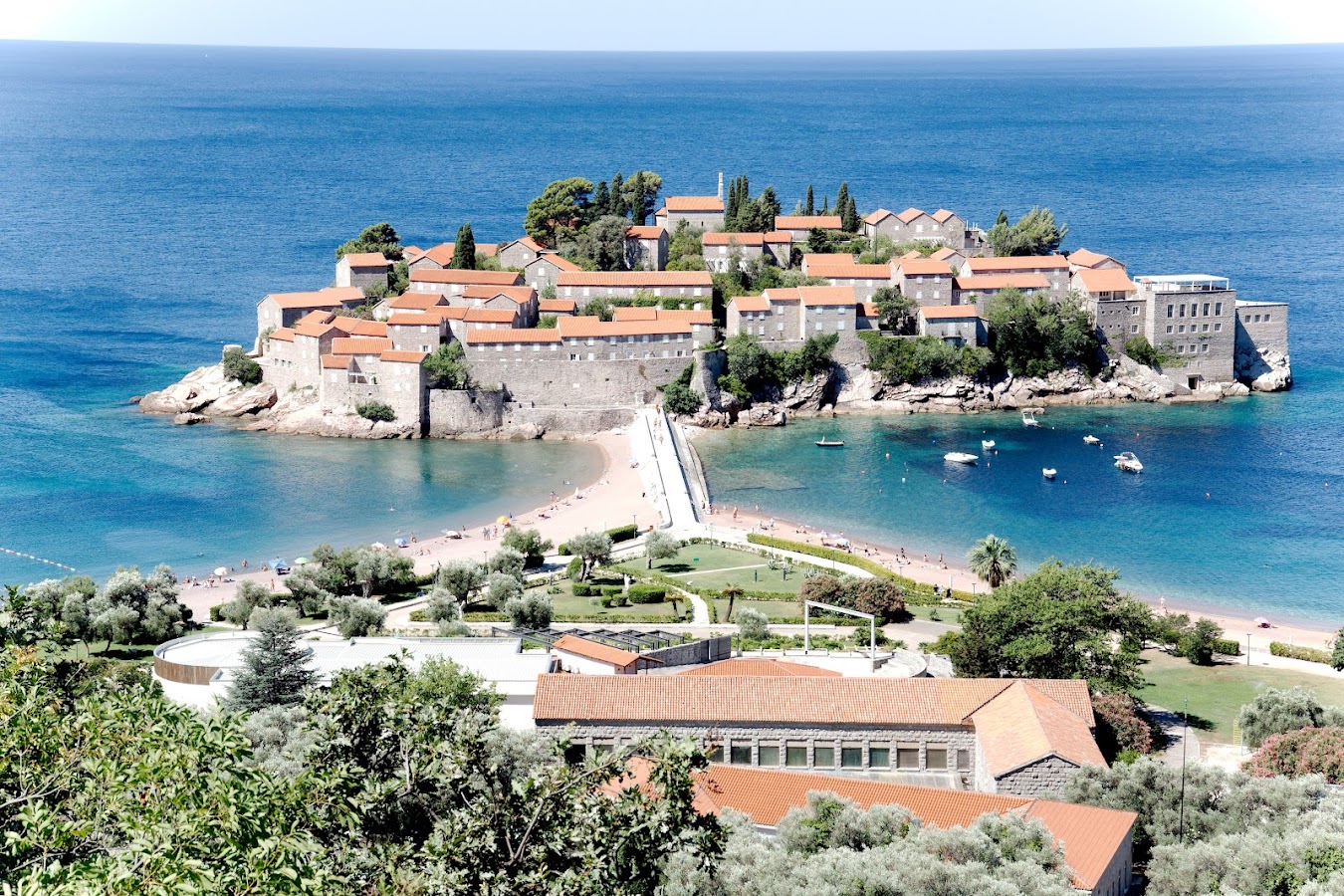
Montenegro · the Adriatic coast
Find your spot on the Montenegrin coast.
Every beach, every beach bar — sunbeds, baldahins and the sea. Browse by city, then down to the bar.
Montenegro · the Adriatic coast
Every beach, every beach bar — sunbeds, baldahins and the sea. Browse by city, then down to the bar.
Destinations
Compare beaches
All comparisons →Guides & stories
All guides →Know the beach lingo
Open the glossary →Frequently asked questions
All questions →Most beach bars in Montenegro serve a mix of light snacks and full meals alongside a full drinks menu — expect grilled fish, calamari, sandwiches, salads, and burek (cheese or meat pastry) at the simpler spots, while busier clubs on beaches like Slovenska Plaza in Budva or Jaz often run a proper kitchen with grilled meats, pasta, and fresh seafood.
Drinks range from cold beer, local wine (the Vranac red is worth trying), rakija, cocktails, and fresh-squeezed juices to coffee and soft drinks. Prices are broadly similar to Southern European beach destinations — a beer typically runs EUR 2-4, a cocktail EUR 6-12 at a mid-range bar, and a simple grilled fish dish EUR 10-20.
Practical tip: smaller or more remote beaches (like Zanjic on the Lustica peninsula) may have only one or two vendors with a limited menu, so bring extra cash and snacks if you plan a full day there.
Organised beach bars and beach clubs in Montenegro generally have at least a basic toilet and a freshwater rinse shower — the more developed spots on busy beaches like Becici, Petrovac, or Budva's Slovenska Plaza usually include changing cabins and hot-water showers as well.
The picture is spottier at quieter or more remote beaches. Small coves on the Lustica peninsula (Zanjic, Mirista) or cliff-accessed spots may have only a portable toilet or none at all. Public beach zones — as opposed to a bar's private concession — sometimes have separate municipal facilities nearby, though quality varies.
A good rule of thumb: if a bar is renting out sunbeds and serving food, it almost certainly has a toilet. If you are uncertain, ask when you arrive or check the bar's Instagram before heading out — most established clubs post photos that make the setup clear.
Many beach bars and beach clubs in Montenegro now offer free Wi-Fi for customers, especially the larger or more upscale venues on popular stretches like Budva's Slovenska Plaza, Jaz, and Becici. Expect the password to be written on a chalkboard, on a card with your drinks order, or just ask the staff.
Signal quality can be inconsistent — a busy August afternoon with dozens of connected devices, or a remote location like a cove near Przno, may mean slow speeds or no coverage at all. Montenegro has solid 4G coverage along most of the coast, so a local SIM card or an EU roaming plan is the more reliable backup for anything important.
If working remotely from the beach is a priority, it is worth checking reviews for specific bars before you commit to a full-day sunbed booking — a few premium clubs have invested in stronger infrastructure specifically to attract digital nomads.
Water sports rentals are widely available at the main organised beaches — kayaks, pedal boats, stand-up paddleboards (SUP), and inflatable rides are common at beaches like Becici, Jaz, Budva's Slovenska Plaza, and Petrovac. Jet ski rides are offered at many of these same spots, typically as timed circuits rather than self-guided rentals.
Velika Plaza near Ulcinj stands out as Montenegro's kitesurfing hub: the beach is roughly 12-13 kilometres of shallow sandy coast, and you will find dedicated kitesurf schools and rental outfits there, particularly good in late summer when the afternoon breeze picks up. Scuba diving centres operate out of several towns including Herceg Novi, Budva, and Bar.
Prices fluctuate by season and vendor — budget roughly EUR 10-20 for a kayak hour, EUR 30-60 for a jet ski ride, and expect kitesurfing lessons to start around EUR 50-80 per session. Always confirm prices before getting on the water, as posted rates and negotiated rates at quieter times of day can differ.
The swimming season on the Montenegro coast runs from around mid-June to late September, with the sea warm enough for comfortable swimming throughout those months.
July and August are the peak months — sea temperatures reach roughly 25–26°C in August, the beaches are at their busiest, and most beach bars and clubs are fully operational. June and September are the shoulder months: water is still warm and pleasant, crowds are noticeably thinner, and prices tend to be lower.
If you're sensitive to cold water, aim for late July through August. If you prefer a quieter experience without sacrificing good swimming conditions, early June or the first half of September are excellent windows.
The Adriatic off Montenegro is coldest in winter (around 10–14°C) and peaks in August at roughly 25–26°C — warm enough to feel more like a pool than the open sea.
In June the water is typically 20–22°C, which most swimmers find comfortable, especially after a few sunny days. By early July it climbs to 23–24°C and stays in that range through late August. September cools slowly: expect 23–24°C in early September, dropping to around 20–21°C by the end of the month. October falls below 20°C and organised beach facilities largely close.
For the warmest swimming, plan your visit for the last two weeks of July through the first two weeks of August — that's when the sea at spots like Becici, Jaz, and Velika Plaza feels at its best.
July and August are by far the busiest months — Budva's Slovenska Plaza, Becici, and the Sveti Stefan area fill up quickly from mid-morning, and premium sunbeds at popular beach bars often sell out by 10 am. Prices for loungers and food are at their highest, and traffic on the coastal road can be slow.
June and September are noticeably quieter. You can usually walk up to most public beaches and find a spot without arriving at dawn. Beach bars are still open, the weather is sunny, and the sea remains very swimmable. Local Montenegrins tend to take their own summer holiday in August, so June and September also have a more relaxed, local atmosphere.
If you want reliably uncrowded conditions, aim for the first two weeks of June or the second half of September. Bear in mind that some smaller beach bars and boat taxis to remote coves (like Zanjic on the Lustica peninsula) may have reduced frequency outside peak season.
The two main airports serving the Montenegro coast are Tivat (TIV) and Podgorica (TGD). Tivat is by far the most convenient for beach holidays — it sits right inside the Bay of Kotor and puts you within 30 minutes of Kotor, Budva, and the Lustica Peninsula.
Podgorica is the national capital's airport and is better if you're heading to the south (Bar, Sutomore, Ulcinj), though Tivat is still manageable from there with about a 90-minute drive.
A third practical option is Dubrovnik Airport (DBV) in Croatia, just across the border. Many travellers flying into Dubrovnik take a taxi or shuttle south to Herceg Novi or Kotor, which can take 45–90 minutes depending on border traffic. Check visa requirements if you'll be crossing from Croatia into Montenegro.


